Under London
Yeti, Vampires, Cannibals, and Borribles

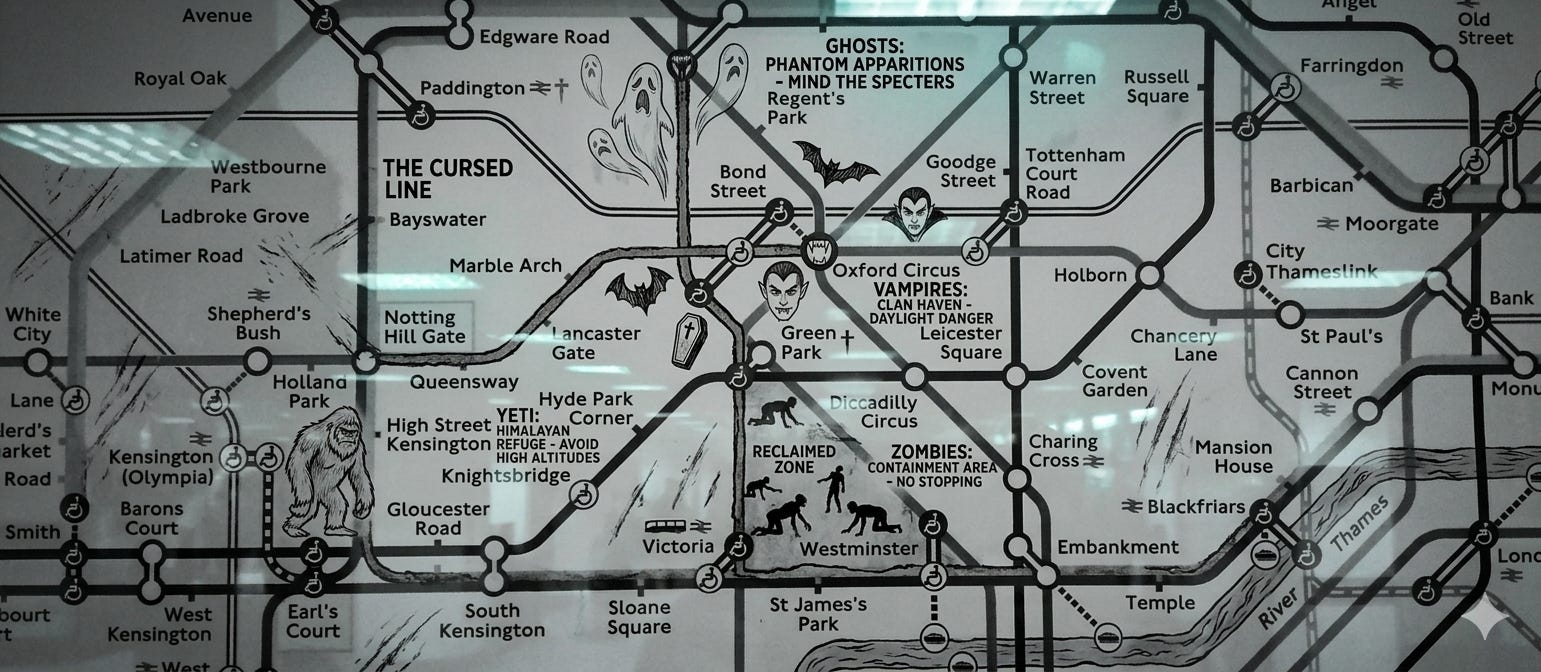
A huge part of London lies in tunnels beneath its streets. There are over 1,300 miles (2,100km) miles of brick lined sewers originally designed by Joseph Bazelgette in the 1860s and 113 miles (182km) of the tube system (also dating back to the 1860s) running on rail tracks underground. In addition to tunnels on the underground system which pass under the Thames the Docklands Light Railway (DLR) dips underground and there are two foot tunnels running beneath the river at Greenwich and Woolwich as well as two road tunnels at Rotherhithe and Blackwall (where a recent third addition, the Silvertown tunnel has been added). Many of the rivers which run into the Thames have now become subterranean, for example the Effra which runs under the streets of Brixton and the Fleet which runs under Fleet Street.
Isamard Kingdom Brunel’s Thames Tunnel at Rotherhithe (constructed over a 20 year period between 1825 and 1843) was the first tunnel ever built successfully under a navigable river. Originally intended as a passageway for horse drawn carriages it became instead an underground shopping precinct which gained a reputation as a haunt for pickpockets. It became a train tunnel as part of the tube network in 1865. Its former grand entrance is now the location of Rotherhithe’s Brunel Museum.
There’s also undeground post office tunnels from a former network designed to carry mail packages beneath the streets of London. This was constructed in the 1850s, after Sir Rowland Hill commissioned a feasibility study into the use of pneumatic tubes to transport parcels.
Ghosts
Covent Garden tube station is said to be haunted by the ghost of Victorian actor William Terris, also known as Breezy Bill, brutally stabbed to death by his rival when leaving the Adelphi Theatre in 1897. Breezy Bill’s ghost is alleged to be drawn to the station which opened ten years later near the site of his favourite bakery.
Other underground stations said to be haunted include Bank where a spectral black nun has been sighted, and Bethnal Green and Balham, both linked to WW2 air raid tragedies
This subterranean city beneath a city has provided inspiration and a backdrop for a host of fantastical fiction, movies and television over the years.
A number Arthur Conan Doyle’s Sherlock Holmes stories first published in The Strand Magazine reference the Metropolitan line the underground’s first route, which ran beneath Baker Street where the detective had his apartments at number 221B. Sax Rohmer’s occult super villain, Fu Manchu, had his Si-Fan crime syndicate lair in a labyrinth of secret tunnels beneath Limehouse in East London, as did his female equivalent, Sumuru.
Underground 1928
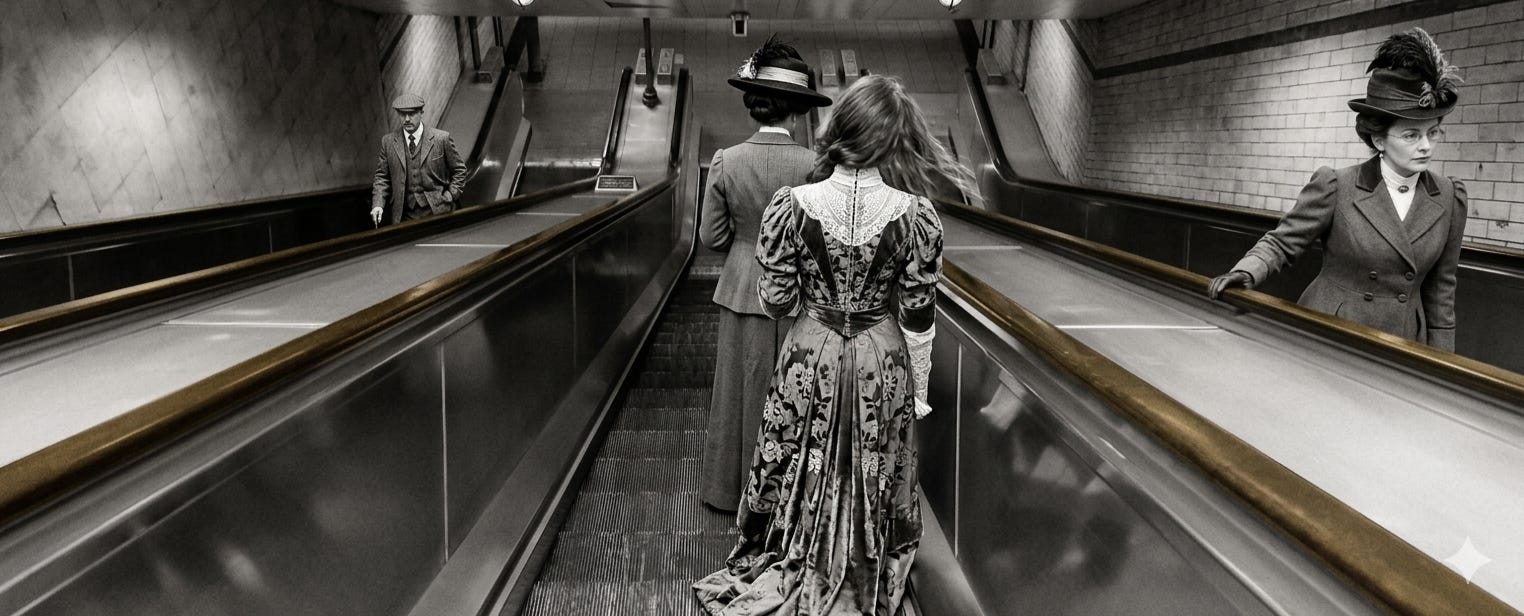
One of the first films to feature the tube network was the silent era ‘Underground’ (1928), directed by Anthony Asquith, son of Herbert Asquith, UK Prime Minister from 1908 to 1916. The film is a precursor to the film noir genre which became popular in the 1930s. Its plot concerns a love triangle between a shop girl, an underground porter, and a power station electrician which leads to a dark tale of revenge. The original wooden escalators leadinng down Waterloo Underground were used for some of the location shots. Asquith was highly influenced by the German expressionist films such as The Cabinet of Doctor Caligarri and Nosferatu. The influence can been seen in the climatic chase sequence though the underground tunnels in which he uses shadow and off centre angles to create a terrifyingly surreal atmosphere.
Quatermass (1967)
One of the best known London Underground films is Hammer’s ‘Quatermass and the Pit’ (1967) which is set around the fictional Hobbs End tube station on the Central Line. The character of Professor Quatermass was created by Nigel Neale for the ground breaking BBC 1950’s serials - The Quatermass Experiment (1953), Quatermass II (1955), and Quatermass and the Pit (1958), on which the 1967 film is based. Because Kneale was a BBC employee at the time Hammer were able to acquire the film rights for the serials directly from the broadcaster without the writer’s involvement. The Quatermass Experiment was made into The Quatermass Xperiment in 1957, the play on words emphasising the British Board of censors’ decision to award it an X certificate. Quatermass II followed in 1957. It was the success of these movies that convinced Hammer to go down the route that was to make it synonymous with horror. However a decade would pass before ‘Quatermass and the Pit’ would get the big screen treatment. Directed by Roy Ward Baker, who’s other Hammer credits included ‘The Vampire Lovers’, ‘The Scars of Dracula’, and ‘The Legend of the 7 Golden Vampires’, the film marked the first time Quatermass had appeared in colour.
By then Kneale had negotiated an ex-gracia payment from the BBC, recognising his creative input into the character and was able to be more directly involved in the production than he had been in the first two movies.
The plot concerns the excavation of a new underground station in Hobbs Lane, a fictional London Street which had appeared in the original TV serials. At the time of filming actual excavation work was going on the tube system as part of the extension of the Piccadilly line.
However, the set for the Hobbs End Station was constructed at the MGM Borehamwood Studios. Designed by Bernard Robinson the set included a full size depiction of the fictional Hobbs Lane complete with Victorian Houses in the steet above. For the station itself Robson accurately recreated a tube platform, complete with signage and the type of posters current at the time. This included a poster for another Hammer film ‘The Witches’, due to be released around the same time as Quatermass and the Pit.
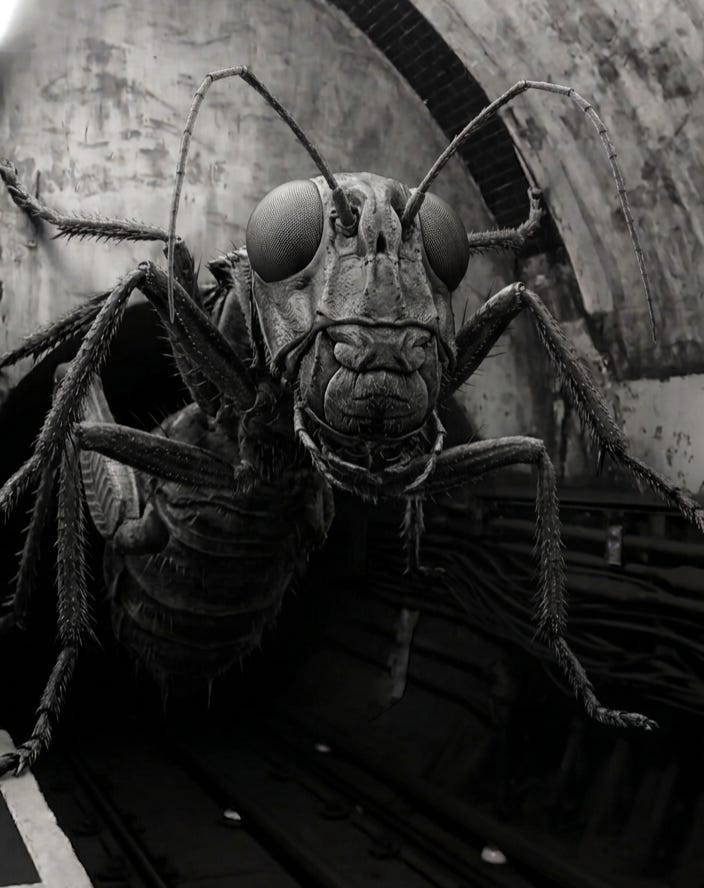
In the shaft they are digging workmen find something that they believe may be an unexploded German rocket from World War Two. When it proves to be something more inexplicable Professor Quatermass is brought in to help investigate. The discovery of the remains of huge insect like creatures inside the craft serves to prove his theory that it is of extra-terrestrial origin.
It turns out that half of the human population have alien DNA and are about to revert to their alien form in a swarm that will overrun the other half of humanity. Of course it is up to Quatermass to save the day. The Professor on this occasion was played by Andrew Keir, who had a year earlier played the leader of the Earth resistance in another BBC big screen adaptation ‘Dalek Invasion of the Earth 2150 A.D.’, one of two Doctor Who movies which launched Amicus Productions as Hammer’s main rival.
‘Dalek Invasion’ also features a studio created tube station. Keir’s resistance have their headquarters beneath the ruined rubble of what is now Embankment station and was then part of Charing Cross. Filmed at Shepperton Studios the set depicting the interior of the ruined station was designed on this occasion by George Provis.
Web of Fear (1968)
In 1968 the Doctor Who TV series itself would feature the tube network when the second Doctor, Patrick Troughton, faced off against the robotic Yeti in the tunnels and platforms beneath the streets.
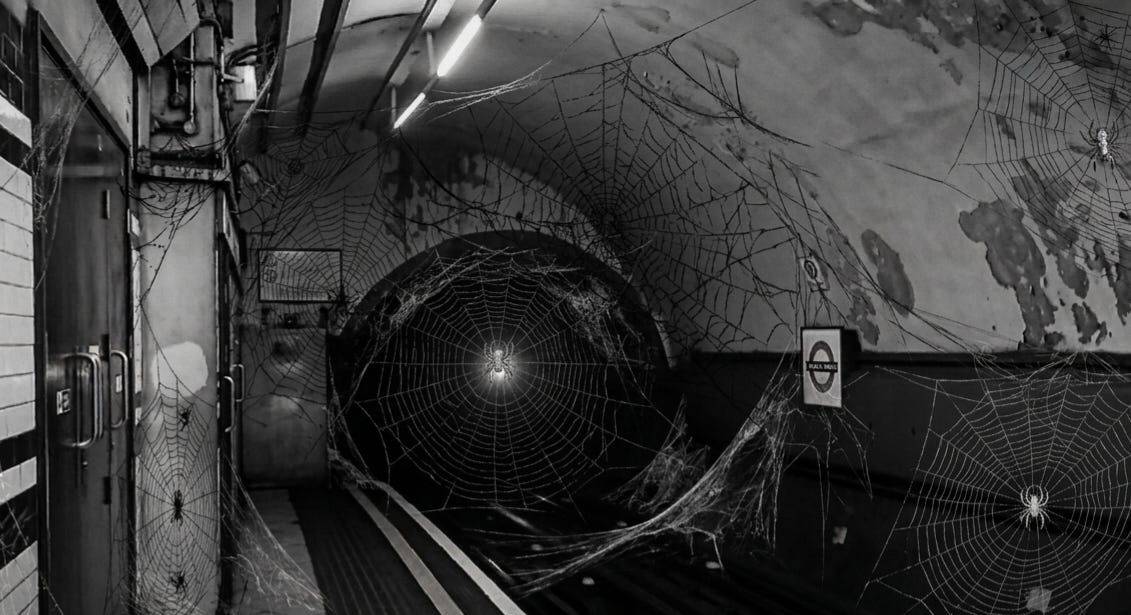
When show director Douglas Camfield approached London Transport for permission to film in the tunnels and platforms around Covent Garden and Aldwych the fees were too high and the conditions attached too restrictive. Instead sets were created by David Myerscough-Jones and filmed at the BBC Ealing and Lime Grove Studios and designed so that when filmed at different angles they appeared to show entirely different sections of the network. The effect was so accurate that when it first aired London Transport fired off a letter to the BBC accusing them of filming without permission and threatening legal action.
The Doctor and his companions, Jamie (Frazer Hines) and Victoria (Deborah Watling) had first encountered the Yeti in earlier serial in Tibet 1926. Now 40 years later the Great Intelligence has reanimated the Yeti and brought them to London so that it can lure the Doctor, take over his persona, and conquer the universe and time itself. Deborah Watling’s father, reprised his role as an older version of Professor Travers first seen in the Tibet based serial ‘The Abominable Snowmen’. Web of Fear was also famous for introducing Nicholas Courtney as army officer Alastair Gordon Lethbridge-Stewart who would go on to become a frequently reoccurring character as head of UNIT (United Nations Intelligence Taskforce).
The Rats (1974)
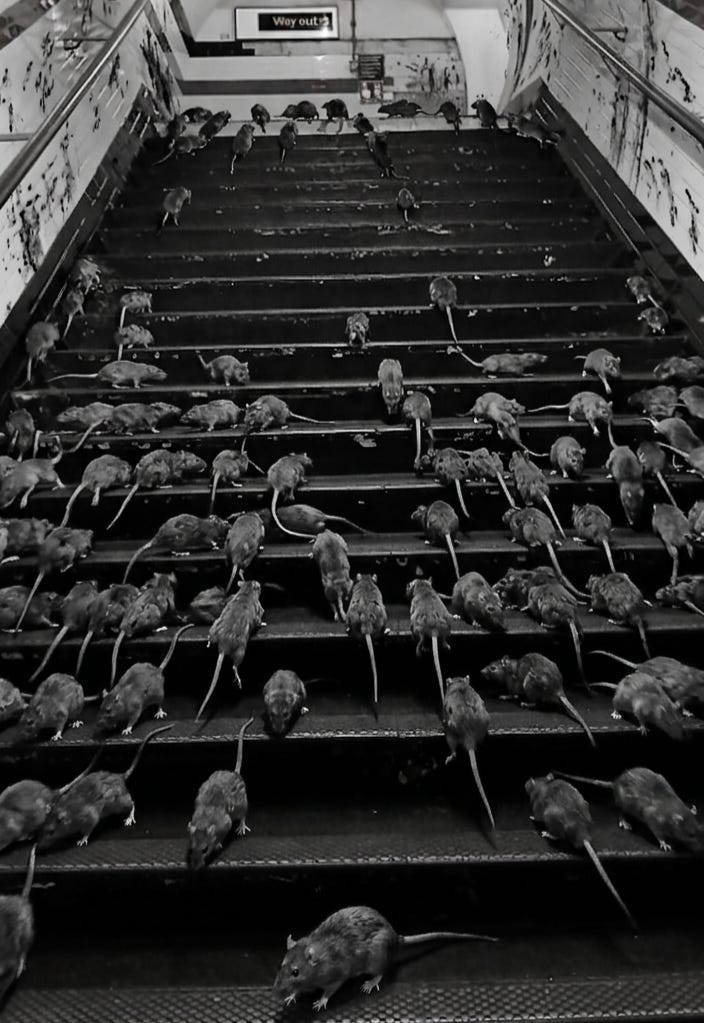
The 1970s saw a host of horror novels, particularly published by NEL (New English Press), focusing on the sub-genre of creature horror where nature turns against humanity. Top of the pile was James Herbert’s ‘The Rats’(1974) in which hordes of mutated, flesh devouring rats lay siege to London. An entire chapter is set in Holborn underground station. It starts with a commuter waiting on the platform. When he feels the wind gusting through the tunnel, a familiar sign that a train is approaching, he stands up only to find it is not a train but a seething pack of thousands of bloodthirsty rodents. The rats then attack passengers on the escalators and staff in ticket office before descending once more to slaughter everyone on board a train which has now come to a halt at the platform.
Zombies
In ‘28 Days Later’ Cilian Murphy and two other survivors of the zombie apocalypse descend the escalators at Canary Wharf and take refuge in a shuttered shop inside the station.
In the follow up ‘28 Weeks Later’ the refugee camp set up by the Americans is based at Canary Wharf. When it is overrun by a new outbreak of the Zombie virus three of the main characters escape the subsequent firebombing of London by descending into the Underground network where they are stalked and brutally attacked by Robert Carlyle’s zombified character.
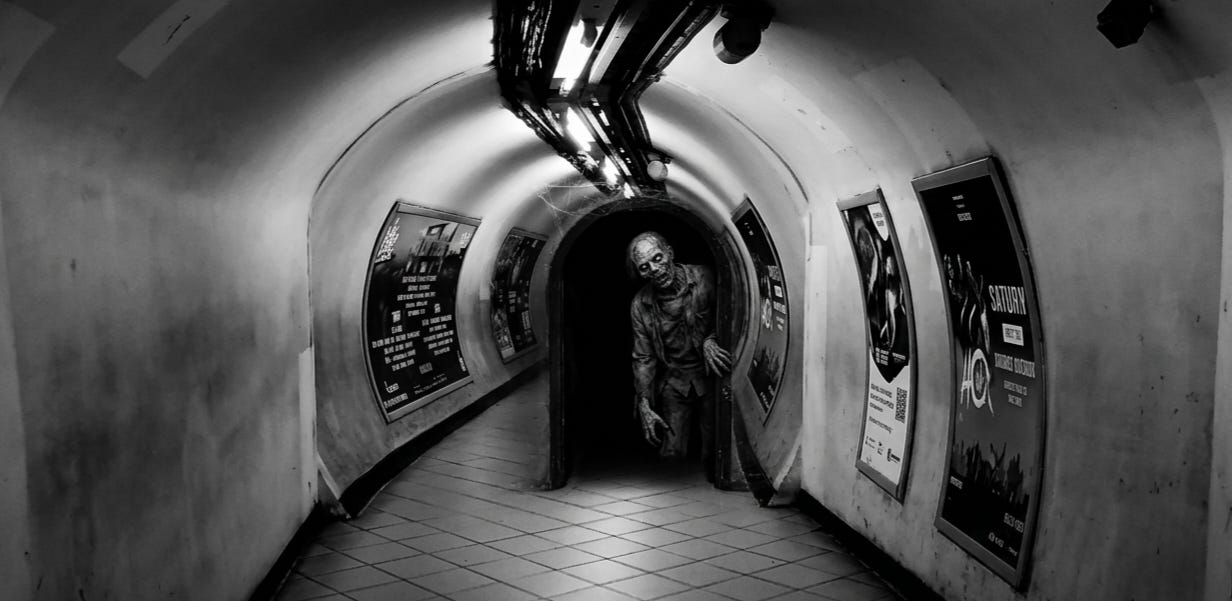
Zombies in the Underground network also feature in Charlie Higson seven part young adult zombie apocalypse, ‘The Enemy’. Because the adult zombies in this interpretation are sensitive to light they often hide in the tunnels during the day time. One of the characters, Small Sam, is forced to escape a zombie attack by descending into the tunnels. Here he encounters two adults, who appear not to be infected by the virus, which only transforms those under the age of 15. However, while somehow managing to retain their intelligence, the couple are infected, and are in fact imprisoning kids in an old railway carriage so they can fatten them up to eat.
Cannibals
Cannibals in the London Underground tunnels feature in Deathline (1972), directed by Gary Sherman, who also directed Dead and Buried (1981) and the TV adaptation of the ‘Poltergeist’ franchise in 1997. The plot involves Inspector Calhoun (Donald Pleasance), a police detective investigating a series of disappearances on the underground. His investigations lead him to a colony of cannibals who are descended from Victorian navies (construction workers) trapped there after a cave in.
In Creep (2004) directed by Christopher Smith, the lead character, Kate (Franka Potente) gets locked in at Charing Cross underground station when she falls asleep on the platform. She is kidnapped by Craig (Sean Harris) who has been the subject of a secret experiment in an illegal medical laboratory located deep beneath London.
Having lived his entire life in the sewers, he has become feral and cannibalistic, and developed an obsession with surgery himself, torturing his victims, who he keeps in rat infested cages, with rusted surgical instruments.
The film’s climax has Kate stumbling out of the station traumatised and bloodied to find herself in the midst of the morning rush hour. When the film was released London Underground declined showing it promotion posters as they were felt to be too unsettling for commuters.
Vampires
In the 2013 ‘Dracula’ TV series shown on Sky Living, vampire hunter Lady Jayne Wetherby (Victoria Smurfit) uses a sword to take down a horde of the undead in a train carriage hurting through the underground tunnels.
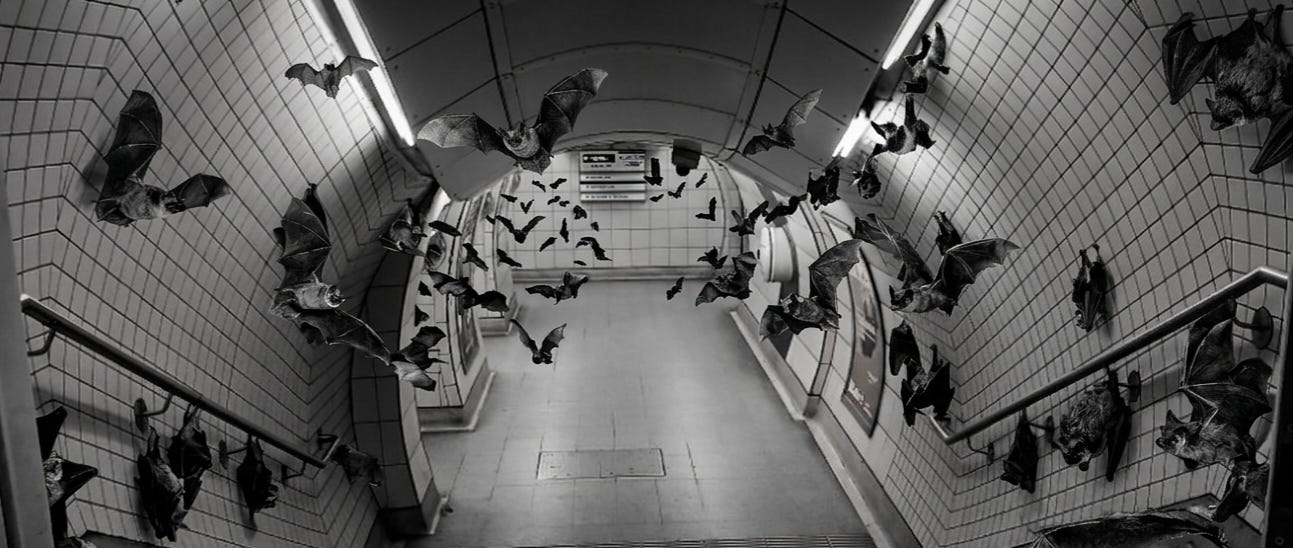
Two decades earlier in Anno Dracula (1992 ) Kim Newman, a big fan of movies such as ‘Deathline’ and ‘Creep’ has a feral, cannibalistic survivor of the vampire infestation raging in Victorian London living in the underground tunnels. Charles Beauregard, along with other humans and renegade vampires seeking to overthrow the reign of Dracula as Victoria’s Prince Consort, use the tunnels as a cover for their insurrectionist activities, often having to evade capture by Dracula’s secret police, the ‘Grey Guard”.
Newman revisits the underground in his graphic novel prequel ‘Anna Dracula 1895: Seven Days in Mayhem, illustrated by Paul McCaffrey.
Sticking with graphic novels, in ‘V for Vendetta’ the 1982 graphic novel by Alan Moore and David Lloyd subsequently given the big screen treatment for the 2005 film starring Natalie Portman and Hugo Weaving, the London Underground plays a pivotal role.
In both the graphic novel and the film, anarchist agitator V lives in an abandoned part of the Underground near Victoria he calls the Shadow Gallery where he has collected items of “forbidden” culture such books, music, and art banned by the fascist Norsefire regime which governs the country.
In the climax of the movie tube train packed with explosives is send speeding through the tunnels to blow up the House of Commons, while in the graphic novel 10 Downing Street is the target.
Borribles
A secret society of a different kind features in the 1980’s young adult trilogy
The Borribles by Michael de Larrabeiti. The Borribles are like a working class urban version of Peter Pan’s lost boys. They never grow old unless they are captured by members of the SBG (Special Borrible Group) who clip their pointed ears. London’s tunnels, sewers, and subterranean rivers are the Borrible domain, known as The Deep Run.
Tribes of Borribles dominate different territories of London such as Battersea, Streatham, and Clapham south of the Thames, and Whitechapel, Stepney and Old Street north of the river. Their rivals, the shaggy Rumbles, live in a huge underground complex under Wimbledon Common, based on the deep level World War Two air raid shelter beneath Clapham Common. The Rumbles are a parody of the Wombles created in1968 by Elisabeth Beresford and turned into a massive TV hit in the ‘70s. They were furry, burrowing creatures who lived in tunnels under Wimbledon Common, tidying up and recycling rubbish left behind by everyday folks. De Larrabeiti considered them to be twee symbols of polite, middle-class environmentalism, ripe for parody in his gritty portrayal of youth sub culture.
Another tribe, the Wendles, have the River Wandle as their territory and dominate what is described as the “wet” tunnels (sewers and subterranean rivers that weave in and out of the Tube system.)
Urban Fantasy
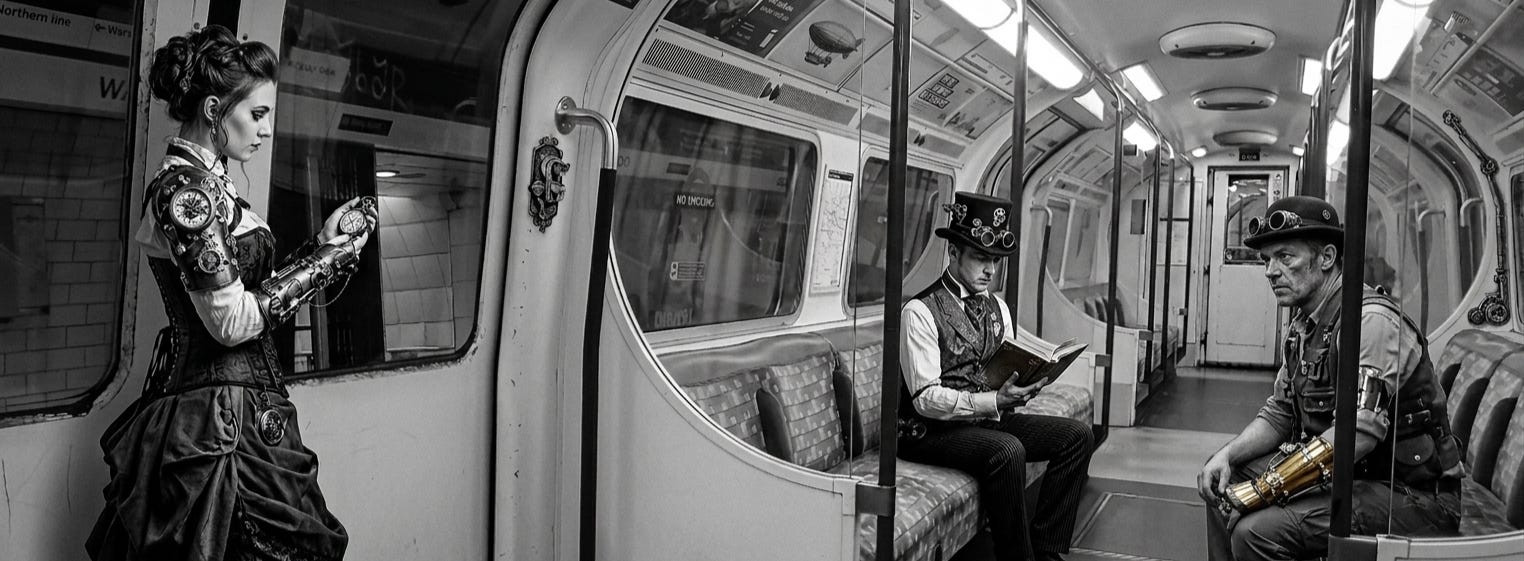
Urban fantasy is another sub-genre that has utilised the Underground network as an atmospheric location.
‘Neverwhere’ by Neil Gaiman (1996) and the TV series in the same year has its main character, Richard Mayhew, drawn into the secret world of ‘London Below’ where the train stations are the names of real characters. Earl’s Court is a court presided over by an Earl on a train, Angel, Islington is an angelic entity and Blackfriars is home to group of friars dressed in black. There also seven sisters at Seven Sisters and shepherds at Shepherds Bush.
In the climax of the novel Mayhew has to face off against the ‘Great Beast of London’ which lurks in the labyrinth of London Below. The beast is based on the urban legend of the Hog of Smithfield, which is said to have escaped into the sewers from Smithfield meat market and grew into grotesque flesh eating monster.
Similar territory was explored in ‘King Rat’ by China Meiville which was published two years later in 1998. After being accused of murder the lead character Saul Garamond discovers he is the son of a deity known as King Rat who inhabits a secret world in the sewers and tunnels beneath London, also the territory of Anansi, King of the Spiders and Lop Lop, King of the Birds.
The deep tunnels Northern Line provide the backdrop, and Saul’s climatic confrontation with his Nemesis the Pied Piper takes place deep beneath the streets.
Meiville would revisit the Underground network in his 2007 young adult urban fantasy ‘Un Lun Dun’, which also weaves in double decker buses and several of the bridges that span the Thames.
Rivers of London
Several London’s bridges feature in the back story of Elizabeth Broom in Ben Aaronovitch’s River of London. Having failed her nursing exam she attempts to throw herself off several bridges, finally succeeding at London Bridge itself. However, she is not washed away and instead accepts a proposition to become ‘Mama Thames’ and rule over the tidal section of the river. The series which has now spawned 10 novels, 10 graphic novels also features Mama Thames’ daughters. all named after subterranean Thames tributary rivers such as the Effra, the Fleet, and the Tyburn which are their fiefdoms.
The main character of the series is police detective Peter Grant whose investigation into the supernatural and paranormal bring him into close contact with this pantheon of river dieties. His love interest, Beverly Brooke, is one of Mamma Thames’ daughters, named after the river in south west London which is her territory. Grant’s investigation often find him descending into the tunnels beneath London. Particularly in the third novel of the series ‘Whispers under London’.
Investigating the murder of the son of an American Senator, Peter and his partner, Lesley May, are led by an infamous ‘sewer walker’ into the foul smelling tunnels beneath Fleet Street.
Detective Judge Armitage
Another London police officer whose investigations regularly take him to the tunnels and sewers beneath London is Detective Judge Armitage in the graphic comic serial set in the Judge Dredd universe. Mega City One, where the Judge Dredd stories are set sprawls across New York and the east coast of America. But in the 1990s the imaginary universe was brought to London’s Waterloo and the Soutbank, where IPC Media, the comic’s publishers were based, in the spin off series Detective Judge Armitage. Armitage, with his partner, Judge Treasure Steel, works out of New Scotland yard, located by the Thames near the decaying ruins of the brutalist archetecture of the Southbank Centre. Armitage and Steel’s investigations often take place in the labyrinth of tunnels and former sewers beneath Waterloo Station.
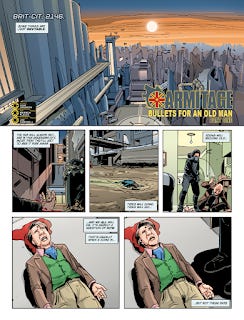
Dave Stone and Sean Phillips the creators of the Armitage stories based their futuristic poverty stricken and overcrowded Brit-Cit on the huge homeless community which existed at the time beneath the Waterloo roundabout underpass where the IMAX cinema sits today.
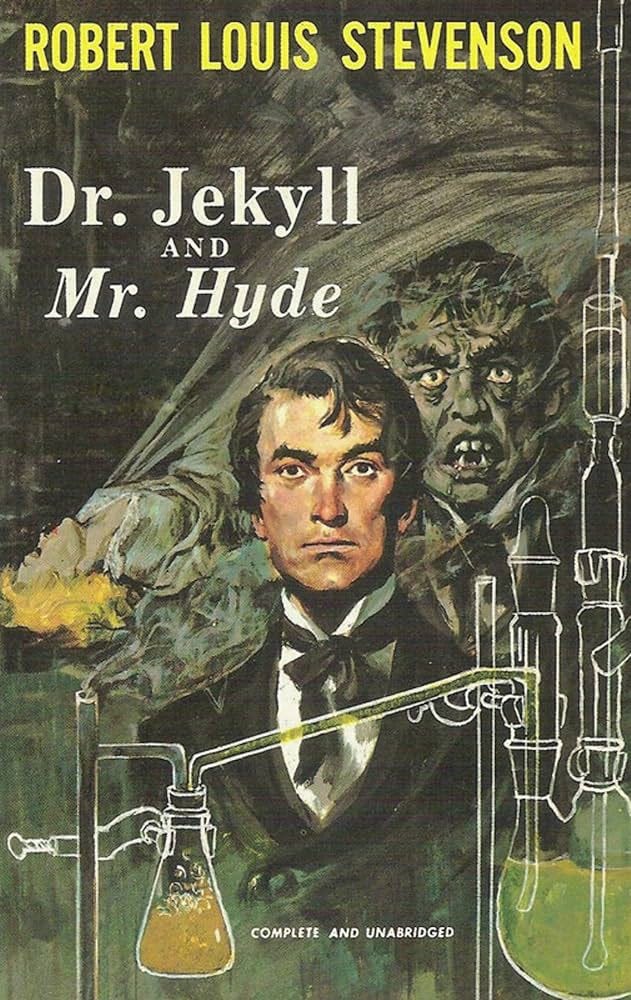
The underground represents another side of London. I’ll be exploring duality of a different nature on Sunday April 19th when I lead London Guided Walks’ Jekyll and Hyde Tour. It’s a 90 minute walk, starting from Covent Garden, the tube station said to be haunted by Breezy Bill. You can book through the link the code ‘David10’ give a 10% discount.