
Limehouse Chinatown
Opium Dens, Global Villains, Dark Chinoiserie

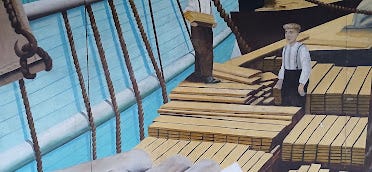
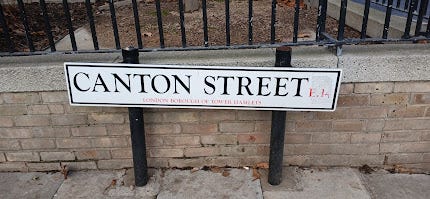
Limehouse, located between West India and East India Docks in London’s east end, was, from the Victorian era until the Second World War, the city’s first Chinatown, home to shop keepers, laundry owners and restaurateurs from the migrant Chinese community that settled in the Pennyfield’s district. Today many of the streets in the area still bear the names, Pekin, Nakin, Amoy, Ming, allocated to them at the time by the London Board of Works in acknowledgement of ethnic diversity of the community and a perfect opportunity to avoid repetition in London street names.
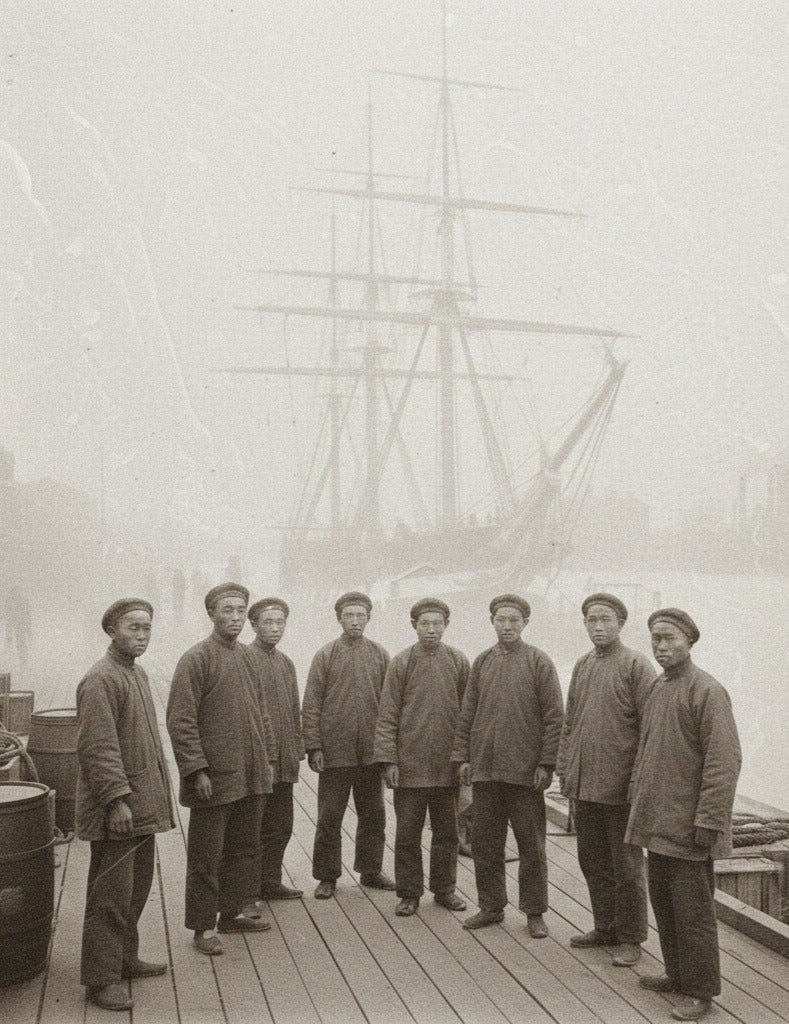
The initial settlers were former sailors who had worked on merchant ships belonging to the East India Company. Seaman’s missions, such as the Seaman’s Rest on East India Dock Road provided food and accommodation for these transient mariners, often giving access to ship’s captains seeking to hire crewmen for return voyages. Gradually the more enterprising of these seamen decide to lay down roots and set up businesses catering to the needs their seagoing brothers residing at the missions.
Integration into the local community wasn’t an easy one. Despite the east end being quite racially diverse, including Jewish, Irish, and South Asian communities, Chinese businessmen often faced hostility and hateful racism. For example the first Chinese Laundry to open in Pennyfields was blockaded by locals.
Despite the initial adversity the community persisted, and a number of the men took British women as wives. Chinese women were a later addition to the community, often taking up employment as nannies or housekeepers for wealthy British families returning from the colonies. The establishment of this community led to a sensationalised, darkly exotic, and often xenophobic form of fiction that turned out to be both controversial and inspirational in equal measure.
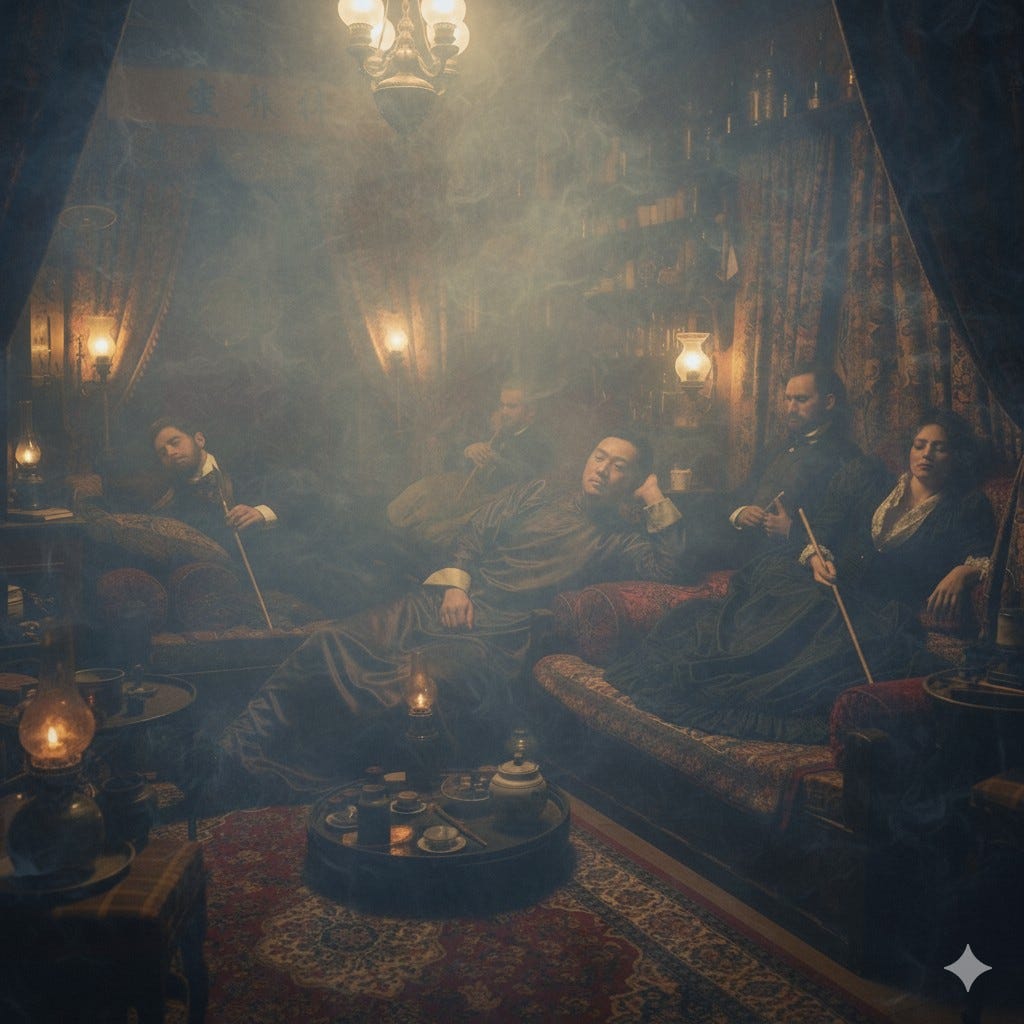
At the heart of it was the opium den, the seething heart of an imagined criminal underworld with occasional occult undertones. It was a bit rich that British writers set out to portray the Chinese as the villains in relation to opium, when, in fact, the shoe was on the other foot. It was in fact the British who began smuggling opium into China from India in the 1830s.
The subsequent epidemic of opium addiction amongst the populace led to an attempted clampdown by Chinese Commissioner Lin Zexu who seized and destroyed over 1,400 tons of British opium in Canton in 1839. Bowing to pressure from opium traders the British Government sent a fleet of gunships to China to forcefully open up the opium trade once more. This resulted in the 1842 Treaty of Nanjing in which the Chinese were forced to pay a ‘fine’ of twenty-one million silver dollars. A second Opium war broke out in 1856, resulting in the 1860 Convention of Beijing which forced the Chinese to legalise the opium trade.
Nor was trading or possessing opium illegal in England at the time and opium dens were common in many parts of London, not just the east end. In fact, you could order opium from Harrods, which would be duly packaged and ready for collection.
Despite what later fictional accounts suggested the proprietors of opium dens were not predominantly Chinese. A member of the team engaged by Charles Booth to gather evidence for his Victorian social study, ‘Poverty Maps of London’ interviewed a married couple who ran an east end opium den. The husband was a Hindu who had worked as a curry chef at an exhibition for Queen Victoria’s Silver Jubilee. The wife was an Irish woman who’d previously been part of a circus act.
Edwin Drood
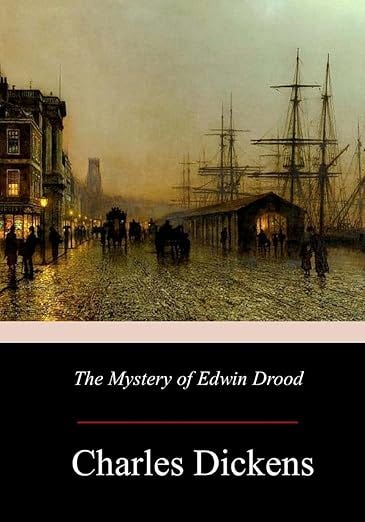
One of the first to depict an east end opium den in fiction was Charles Dickens in his final (unfinished) novel ‘The Mystery of Edwin Drood’ (1870). In Dickens’ time there were two distinct Chinese communities in vicinity of Limehouse. The Mandarin speaking community who hailed from Shanghai and China’s eastern coast, had begun to settle in Pennyfields to the west of the Dock ,and the Cantonese speakers from southern China, who settled around the Limehouse Causeway area to the west of the docks.
It was here to an area west of the docks near Shadwell that Dickens, in the company of his agent and two policemen, visited an opium den, run by Ah Sing and Lascar Sal, as part of his research for his upcoming novel. Ah Sing, a Chinese immigrant, who also went under the name, John Johnstone, was famed throughout the east end for his perfection of the right blend of opium. Lascar Sal, his partner, was an English woman, real name, Elizabeth Proud, who provided board and lodgings for foreign sailors as well as providing the business side of their opium ventures.
Their opium den provided the inspiration for the location of the first chapter of Edwin Drood where the villainous John Jasper is introduced as an opium addict leading a double life. The den’s proprietress, ‘Princess Puffer’, was based on Elizabeth Proud. She reappears later in the plot having overheard Jasper’s drug induced ramblings about his cold blooded plan to murder Edwin Drood.
Dorian Gray
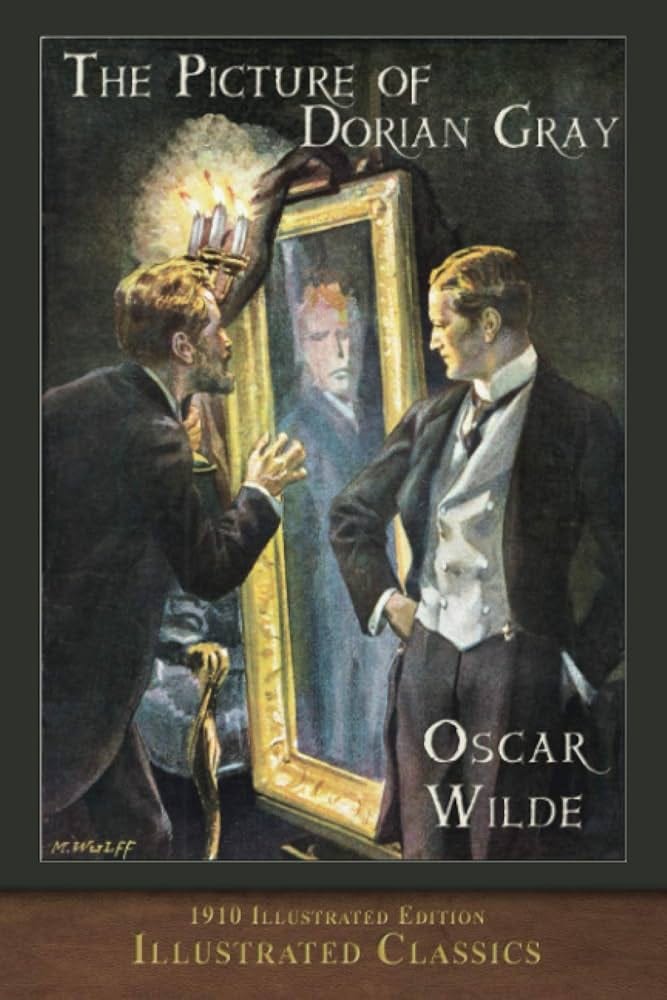
Twenty years later in ‘The Picture of Dorian Gray’ (1890) Oscar Wilde would have his lead character visit an east end opium den in the wake of his murder of his friend, Basil Hallward. Following the hedonistic life he has been living without consequence as a result of the portrait stored in his attic the act of murder seems a step too far, so he seeks ‘forgetfulness’ through the mind fog of opium.
The location of the den is an area once called Bluegate Fields a few streets from where Dicken’s visited Ah Sing and Lascar Sal. Dorian believes that he can cure the sickness of his soul within the heavy sickly atmosphere of the opium den, which is run by a mixed-race woman, described by Wilde only as ‘the half-caste’.
But Dorian’s plans for an escape from his conscience are thwarted by two encounters on his visit. In the den itself he encounters the dishevelled and haggard Adrian Singleton, once a promising young man whose life was destroyed through his association with Dorian.
Then, in a darkened alley near the den, he is accosted and held at gunpoint by James Vane who blames him for the death of his sister some twenty years earlier. Dorian escapes by questioning how he can possibly be the same man when he hasn’t aged. It’s the opium den proprietress who then reveals to Vane that Dorian Gray has made a deal with the devil.
Sherlock Holmes
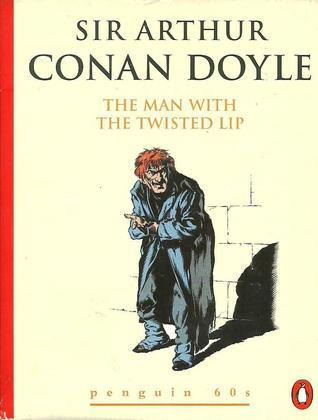
In Arthur Conan Doyle’s Shelock Holmes story ‘The Man With The Twisted Lip’, first published in The Strand Magazine in 1891, Watson visits an east end opium den in search of Isa, the opium addicted husband of his family friend, Kate Whitney. The den in question is known as The Bar of Gold and is located in the fictional Upper Swandam Lane, between a ‘slop shop’ and a ‘gin shop’.
The den is described as containing long wooden tiers of berths beneath low, dark ceilings that are filled with the “sickly-sweet” smell of burning opium. Its clientele are said to hail from all walks of life, South Asian sailors rubbing shoulders with disgraced gentlemen, and all of them reduced to “shadowy figures” by their addiction.
It’s not long before Watson stumbles on what appears to be an old, wrinkled man, bend with age, sitting with an opium pipe between his knees. This turns out to be Sherlock Holmes himself, undercover and in disguise, about to draw Watson into a new investigation which will become ‘The Case of the Man with the Twisted Lip’.
In the Holmes stories Conan-Doyle depicted the detective himself as an addict and a regular user of cocaine, but later had Watson wean him off the habit.
Senasationalisation
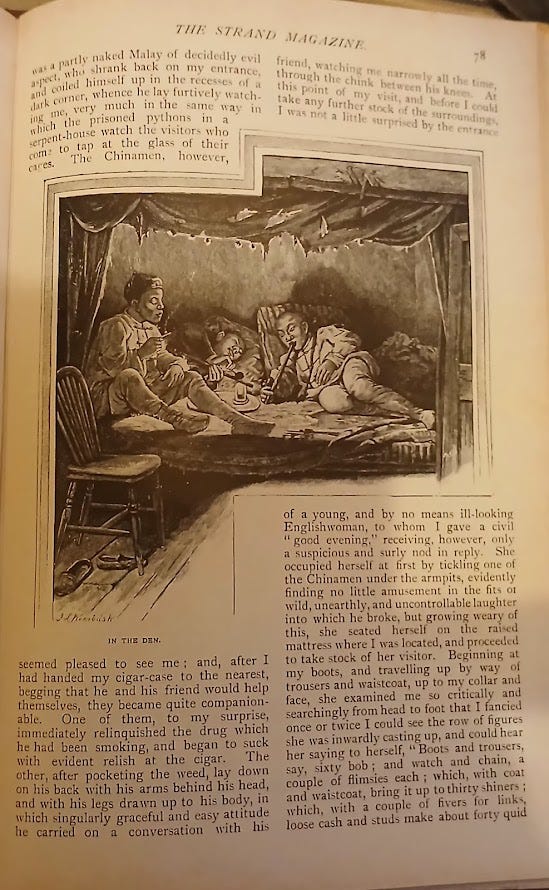
Fictionalised accounts of east end opium dens led to exaggerated semi-factual accounts when popular newspapers sent reporters to visit them. The Strand Magazine, home of the Sherlock Holmes stories, sent its reporter to the same den that Dickens had visited in 1870, by then under different ownership.
He reported that the owner was a man named Chang who grinned at him from head to foot. He describes wreched smokers with palid complexions a yellow hue to the whites of their eyes. He overhears an English woman muttering to herself how much she might get for his watch and chain. This reporter not only observes the opium den he experiments with the wares, falling into a drug induced, dream filled sleep and awaking with a terrible taste in his mouth, a splitting headache, and unable to locate his hat and umbrella.
A similar article entitled ‘A Night in the Opium Dens’ appeared in a rival illustrated magazine. The sensationalist Police Illustrated News also often featured stories of debauchery and outragious crimes in and around opium dens, accompanied by suitably graphic illustrations.
It was in the east end’s Chinatown that Arthur Ward, a young freelance journalist from south London, witnessed a certain Mr King (aka Chan Nan), a wealthy Chinese businessman, allegedly the Kingpin of the Chinatown underworld, stepping out of a limousine outside at a mean looking house, which may have been an opium den, in the company of an exotic Arabic woman. And so the kernel of the idea that led to the creation of his global supervillain, Fu Manchu, written under his pen name, Sax Rohmer, was born.
Fu Manchu
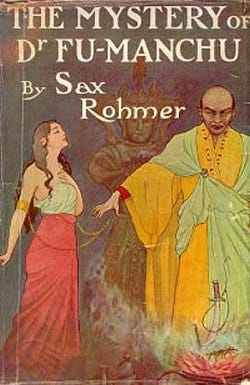
Rohmer’s first short story ‘The Mysterious Mummy’ had appeared in The Stand Magazie. In the Fu Manchu novels he pitted his own versions of Holmes and Watson, Nayland Smith and Doctor Petrie, against the fiendish and highly intelligent Dr. Fu Manchu. The novels turned Limehouse into an exotic netherworld world of fog bound streets and dark alleys where Fu Manchu, along with his cohorts and henchmen in the Si Fan crime syndicate, plotted the downfall not just of the British Empire, but the whole of western civilisation, playing up to the xenophobic ‘yellow peril’ scare that prevailed in Europe after the 1899 -1901 Boxer Rebellion in China.
Beneath the opium dens of this darkly fantastical version of Limehouse lay a labyrthinth of gloomy tunnels and secret lairs where Fu Manchu commanded an army of assassins in the form of venomous snakes and spiders, while cultivating deadly fungi and spores as the vehicles by which bacterial warfare could be visited on his enemies.
Other Rohmer villains who had lairs in the fictional underworld beneath Limehouse were Fu Manchu’s equally formidable daughter, Fa Lo Suee, and Countess Tamara (Tamara the Terrible). His later female villain, Sumeru chose Limehouse to establish her palace in the slums, hidden behind the crumbling brick facades of a Limehouse warehouse, with interiors filled with incense and silk. It was from here she directed the dastardly machinations of her own crime syndicate, The Order of our Lady, while perfecting an arsenal of weaponry based on perfumes, pheromones, and cosmetic surgery.
Limehouse Nights
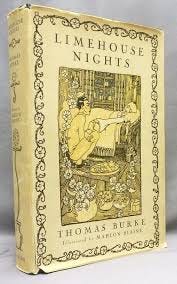
At the same time as Rohmer was creating this fantastical version of Limehouse another south London writer was creating a grittier, crime noir interpretation of the same area. In his short story collection ‘Limehouse Nights’, first published in 1916, he presents the Chinese is a more positive lights while at the same time often depicting the male British characters as thuggish, uneducated brutes.
His stories depict interracial relationships, often with underlying themes of betrayal and revenge at their heart. The collection was critically well received by also considered controversial because of its depictions of love affairs between Chinese men and white women. Like the Fu Manchu stories it also engendered a backlash from Chinese writers and academics who saw it as stereotyping the Chinese community as being a hub for ‘exotic’ criminality.
Burke also published books of poetry ‘The London Lamps’ (1917) and ‘The Song Book of Quong Lee’ (1920). Quong Lee was a fictional character who ran a small shop in Limehouse and spoke of this in one of Burke’s poems.
Concerning a Shop in West India Dock Road
In this shop, which I have called the Store of the Manifestation of Heavenly Grace
I have gathered many things from the home of my fathers
Slabs of waterlily root, the dark blue tea of Foochow
And the dried flesh of the silver fish
Anno Dracula
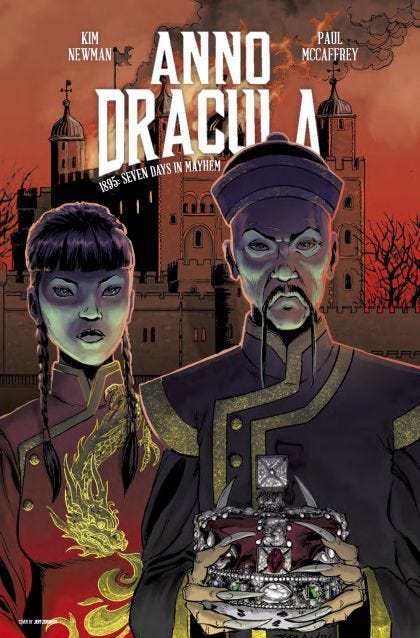
Limehouse was revisited in Kim Newman’s 1992 novel ‘Anno Dracula’ and in Newman’s 2017 five-part graphic novel series ‘Anno Dracula 1895: Seven Days in Mayem’. The premise of the Anno Dracula alternate history series is that Dracula survived the attempts by Van Helsing to bring about his downfall and instead became Prince Consort to Queen Victoria, heralding a dystopian society that is ruled by vampires.
In Anno Dracula the east end’s Chinatown is controlled by the ‘Limehouse Ring’, a powerful crime syndicate led by the ‘Lord of Strange Deaths’, a character firmly based on Rohmer’s Fu Manchu. Limehouse is depicted as beyond the direct control Dracula and his cohorts, and its opium dens are where dissident vampires and insurgent humans come to escape the oppression. It also becomes one of the hubs for the characters in the resistance plotting the Count’s overthrow. In this universe Sherlock Holmes is a man broken by his drug addiction and is being held as a political prisoner in a concentration camp run by Dracula’s regime, while Doctor Watson has become a vampire.
The graphic novel series, with artwork by Paul McCaffrey, is set amongst the vast docks and lantern lit tea houses of Limehouse. It is the ten-year jubilee of Dracula’s reign and an anarchist group known as ‘The Council of the Seven Days’ is using Limehouse as its base to plan a bombing campaign which it hopes will herald the downfall of the regime. Meanwhile the Lord of Strange Deaths, along with his daughter, is engaged in plots of his own to play vampires and humans off against each other.
Brilliant Chang
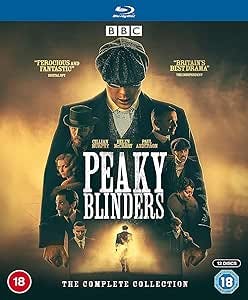
More recently the cult British gangster series ‘Peaky Blinders’, created by Stephen Knight, has on a number of occassions delved into the mythology of Limehouse and its criminal underworld. The Peaky Blinders visits the lanern illuminated Limehouse docklands to conclude an opium deal with the character ‘Brilliant Chang’ (played by Andrew Koji). But they are walking into an ambush set by a rival gang.
Brilliant Chang is based on the real life gangster Peter Chang, who was notoriusly known as the "Opium King" of Limehouse in the 1920s. Real name Chan Nan, he was born in Canton where he studied chemistry, before moving to England and setting up his first restaurant in the real Peaky Blinders’ home town of Birmingham. After his subsequent move to London his knowledge of chemistry led him to become a central figure in the supply of opium and cocaine. His downfall came with overdose and death of the equally notoriuos nighclub hostess, Freda Kempton in 1922. Chang was suspected of supplying the drug that killed her but never arrested. He was, however, arrested for drug possession in 1925 and consequently deported.
If you’d like to delve deeper into the depictions of Limehouse Chinatown, with all its controversies and scandals, and how Chinese writers such as Lao She sought to reclaim their own narrative I am doing an upcoming series of three online presentations for Rest Less.
13th February - The Fiendish Plots of Sax Rohmer
13th March - Limehouse Nights
April (date to be confirmed) - Anna May Wong - The Toast of Piccadilly